


Introduction
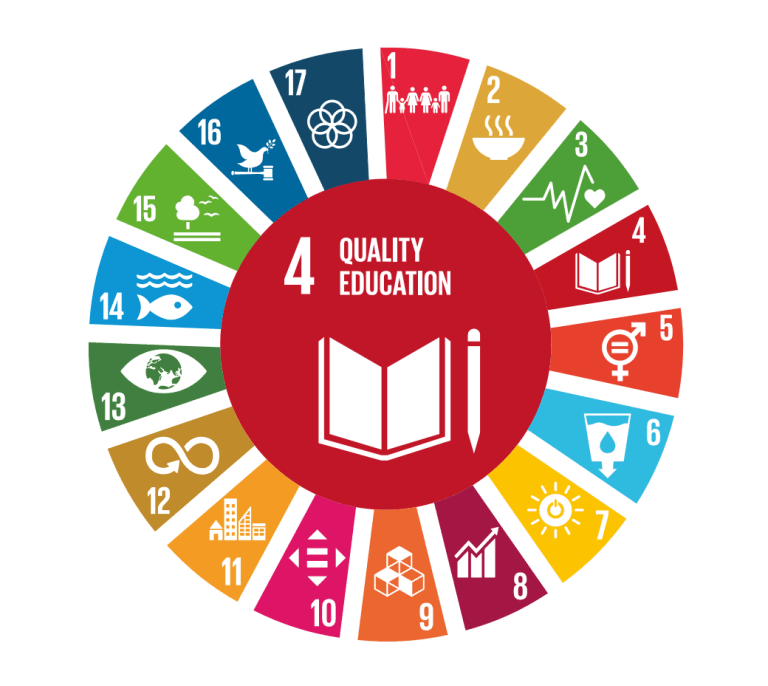
At the 1972 Stockholm Conference and the 1992 Rio De Janeiro Conference, education (formal, public awareness, and training) was recognized as an important tool for tackling social, economic, and environmental problems in individual nation-states and for ensuring future social, economic, and environmental sustainability. This answer led to the development of the Global Action Program (GAP) in 2014, which aims to “generate and scale up action in education at all levels in order to accelerate progress toward sustainable development.” Its strategies are focused on “1) advancing policy; 2) transforming learning and training environments; 3) building capacities of educators and trainers; 4) empowering and mobilizing youth; and 5) accelerating sustainable solutions at the local level” (UNESCO, 2017).
Why ESD matter in Lebanon.
Before 2017, Lebanon’s national policy was in disarray due to political instability and disunity in the country. However, the government has tried to move the country forward with a vision that encompasses “Stabilization, Growth, and Employment” since wars have prevented the country’s economic growth, simultaneously impeding social development. Pushing toward the SDGs was developing a new national vision addressing the country’s social, economic, and environmental dimensions. The plan (NPMPLT) aimed at “country unity, balanced development, and rationalized resource use.” Although this plan was reported to have centered not on all the dimensions, subsequent national plans have since moved in the direction of putting social, economic, and environmental challenges on the country’s agenda and national discourse. For example, the “National Afforestation and Reforestation Program (2014), Marine Protected Areas Strategy (2012), National Strategy for Women in Lebanon (2012), and National Poverty Targeting Program (2011)” (Lebanon, 2018).
As part of the humanitarian and development crises in Lebanon, the impact of mines, cluster munitions, and explosive remnants of war, among others, has generated environmental and social problems for the Lebanese government that, if solved, will equally reduce inequality and social unrest caused by the rising poverty rate.
Furthermore, project planning and implementation under individual pillars is still the approach taken in Lebanon, as data reflects. The extent to which the three dimensions are put into consideration or integrated into planning is relatively unknown. However, some Lebanese NGOs, such as the Asfari Foundation, also known as the Lebanese Center for Active Citizenship, situated on the country’s northern side, use training and dialogue to educate citizens on being active and responsible citizens, tolerance, and respect for others. Their mission and operation focus is not explicitly within one dimension of ESD. LCAC has also collaborated on environmental project initiatives, as the next section of this paper will reflect.
A recent quantitative study conducted by Mekhael and Shayya (2018) on the knowledge, attitudes, and behaviors of 437 10th-grade students towards sustainable development in Lebanon indicated that first, knowledge and attitude on the three pillars were relatively high, but skills were low. Second, the presence of environmental clubs in schools became a significant factor in the knowledge acquisition of Lebanese social, economic, and environmental issues. In other words, students in schools who had environmental clubs and participated in club activities scored
significantly higher than students whose schools had no environmental clubs. Third, the study reported that students knew more about social and environmental dimensions than economic ones. In addition, the study further found among grade 10 students that although they have the
highest knowledge of environmental issues and the challenges of disunity, political unrest, and poverty in society, they were unable to link the issues to their health and human rights violations. Similarly, on the subject of changing the country’s energy system to a renewable source of energy, the study reveals that students are not aware of the importance of renewable energy nor its significance in slowing down global warming (Mekhael and Shayya, 2018).
As part of the humanitarian and development crises in Lebanon, the impact of mines, cluster munitions, and explosive remnants of war, among others, has generated environmental and social problems for the Lebanese government that, if solved, will equally reduce inequality and social unrest caused by the rising poverty rate.
The issue of land contamination in the Northeastern region of Lebanon came about as a consequence of war. Landmines, cluster munitions, and chemical explosions have made a large area of land unsuitable for agriculture or living. According to a UNDP 2019 study, this huge loss of land is robbing Lebanon’s economy of 600 million dollars in economic opportunity. The war in other countries and the influx of Syrian refugees necessitate curing the contaminated areas and will positively impact social and humanitarian sustainability in the country. As a social, economic, and environmental endeavor, in 2016, the Lebanon government began a clearing operation of a 118 km-long area – a project managed by the Lebanon Mine Action Center (LMAC). With funding from the EU and operation support from UNDP, LMAC is on its way to lessening the effect of contamination concerns and serving the country’s economic and social cause.
Although this is an ongoing project, some major achievements have been “declaring the Northern Governorate of Lebanon completely clear of mines; enablement of affected communities to socially and economically reintegrate into their communities; empowered and equipped affected communities to deal with the residual risk of mines through Explosive Ordinance Risk Education (EORE); transferred expertise to LMAC in order to support stability, security, and territorial cohesion.” Another important aspect of the project is its focus on promoting human rights, gender inclusivity, and the rights of people with disabilities (UNDP Lebanon, 2021).
Analysis
Although political instability, corruption, wars, and the Covid-19 pandemic have disrupted programs and movements in the direction of social, economic, and environmental sustainability, national and international will continue to steer the country back through education and actionable interventions. This section will explore a few educational and action programs/projects led and implemented by the Lebanon government, NGOs, schools, and international organizations.
Youth Environmental Clubs in Tripoli
An environmental project collaboration funded and executed by the Lebanese Center for Active Citizenship (LCAC), Development for People and Nature Association (DPNA), Utopia and Yours Association in the North, and the U.S. Embassy Beirut Local Grants Program brought together four private schools, four public schools, and five universities into active engagement to address environmental issues in Lebanon. Previously in 1996, Lebanon launched the environmental clubs initiative in schools and universities, which promoted environmental awareness and knowledge among students (Environmental Clubs Swap Green Ideas, 2006). In fact, Mekhael and Shayya’s (2018) study report attested to the impact of environmental clubs on students’ knowledge, attitude, and skills, reporting that students in schools without environmental clubs scored lower than those in schools with environmental clubs.
The ongoing environmental clubs’ program is then followed by events that encourage participating clubs to present ideas for tackling environmental issues in their region. One of those events was held in Tripoli with thirteen school clubs in attendance and presented ideal solutions on environmental subjects such as “nylon bags, green roofs, eco-tourism, promotion of alternative energy, filtering drinking water, and expansion of green spaces in schools.” Three of the environmental initiatives were supported to become projects that would be implemented in
Tripoli (Gaga & Cooper, 2022).
Environment Academy
Civic engagement and awareness initiative led by Impact Lebanon. Since 2019, impact Lebanon, a Lebanese NGO, joined with the AUB Nature Conservation Center (AUBNCC) to execute a project titled “Environment Academy.” The project is planned around community groups’ participation and long-term solution inputs for fixing Lebanon’s most urgent environmental issues, such as solid waste management, water contamination, air pollution, and the loss of green space. This project encourages local community teams to submit proposals and ideas. The chosen teams are then trained, and their ideas refined and implemented. The main objectives of this project are to (1) “build the capacity of community members in the process of finding solutions that solve the environmental challenges of the area, and (2) use a participatory approach to co-create and activate systematic and feasible environmental solutions (Impact Lebanon, 2019).
Informative Videos
Impact Lebanon is a Lebanese NGO that uses videos and other mediums to educate, stimulate and raise awareness in order to transform Lebanon. Because raising collective consciousness is pivotal to achieving active social, economic, and environmental participation, in 2018, Impact Lebanon used informative short videos posted on Facebook to educate and inform the public about Waste Management problem in Lebanon and the proposed Amnesty Law. The videos addressed national political recommendations and decisions that will negatively impact
the environment, the connection between the rising health problems and activities intoxicating the air, and individual responsibility and accountability. A seminar titled “Waste Management in Lebanon: From Crisis to Sustainable Future.” was organized for the following year (Impact Lebanon, 2018).
IGESP, the interfaculty graduate environmental sciences program of the American University of Beirut
The American University of Beirut is one of Lebanon’s private universities. The IGESP is an ongoing academic program run by the AUB. In 1997, an academic MA degree in Environmental science was launched. The degree opened to four major tracks: Environmental Technology, Ecosystem Management, Environmental Health, and Environmental Policy Planning. Students were taken into the programs from all fields and institutions. The program faculty and courses were selected from the Faculty of Agricultural and Food Sciences (FAFS), the Faculty of Arts and Sciences (FAS), the Faculty of Engineering and Architecture (FEA), the Faculty of Health Sciences (FHS), the Faculty of Medicine (FM) and the Olayan School of Business (OSB). Although the MA is generally related to the environment, IGESP embodies a multi-dimensional scope -policy, economics, health, medicine, arts, and agriculture – to prepare students to address global warming in Lebanon and beyond (AUB, n.d.).
Green Schools: “56 Schools in Lebanon are currently certified as Green Schools!”
Greens Schools is a MENA school certification program that aims to transform the Middle East & North African region schools into schools that promote environmental sustainability standards in “building measures, administration practices, and curriculum and students’ engagement.” This is an overall initiative that compels and supports K12 schools in Lebanon and the Middle East to adopt the paradigm of (environmental) sustainability into the physical structure, management, as well as curriculum of their schools. Further, schools are assessed, supported, and regularly rated according to these sustainability categories: waste, green spaces, energy efficient, water efficient, health and safety, sustainable education, and innovation (Green Schools, 2019).
CLIMA project in Bickfaya Schools in Lebanon: Awareness Campaign for Lebanese Students
Bickfaya is a town in the Matn District region of Mount Lebanon. The ongoing initiative is focused on raising students’ awareness of environmental-friendly agricultural practices such as “proper sorting and composting.” Students were taught and engaged in healthy composting techniques at the Bi sorting facility, where they practiced the procedures of reducing, reusing, and recycling. It was reported that the majority of the student had become familiar with the subjects and were curious to learn about the procedures. Students were given the opportunity to experience and learn hands-on. The program reported that the region was ahead of the rest of Lebanon, such that they operate an “independent waste management center and a door-to-door approach while collecting waste.” In addition, students were engaged in gardening and planting exercises- distributing vegetable seeds to replant surrounding lands around their school (ENICBCMED, 2022).
MYSEA – Mediterranean Youth, NEETs, and Women advancing Skills, Employment, and Awareness in the Blue and Green Economy in Lebanon
MYSEA is an ongoing project that focuses on local and national engagement. New job profiles are needed as a result of the increasing spread of environmentally friendly and sustainable developments in the waste management and agri-food industries. MYSEA project began in 2020 in Lebanon and sought to use sustainable agriculture and possible solutions to address economic and social problems in Lebanon. This is, in fact, relevant and useful given the high poverty rate and the huge gap between male and female participation in the labor force. As of 2021, only 20.7% of women contributed economically, and 64.3% were men. Balancing consumption and production is quintessential in a country with a high poverty rate. In other words, when production exceeds consumption, poverty declines. Along with educating youth and women about new opportunities around sustainable agriculture, the project is also training national and ministerial authorities in policy areas that affect Lebanon’s social, economic, and environmental development. The project’s overall goal is to reduce unemployment among youths and women through technical and vocational education, mentoring, and coaching, which is currently a major social problem in Lebanon (MYSEA, 2020).
Reflection
Although plagued by political unrest, Lebanon, in my view, has demonstrated its commitment to social, economic, and environmental sustainability ideals. In my research, the participation of NGOs, schools, citizens, and the nation’s current government is pronounced. The Lebanese government’s cooperation with international organizations is a testament that SD is not out of reach for the country. Although environmental initiatives seem to outweigh social and economic programs, each project harbors solutions for social and economic issues. Nevertheless, as indicated in Mekhael and Shayya’s (2018) study, there is a need to help Lebanese students connect social, economic, and environmental issues and impacts. Secondly, since environmental clubs significantly impact students’ knowledge, attitude, and behavior toward SD, it is crucial that all Lebanese schools adopt environmental clubs into their extracurriculars.
Finally, Egypt public and private schools have the opportunity to incorporate environmental clubs into their extracurricular. First, to impart knowledge and raise students’ awareness about social, economic, and environmental issues and their impacts locally, nationally, and internationally. Prominent Egyptian universities should invest in local schools’ services through training and knowledge-disseminating activities. To increase public awareness, Egyptian NGOs need to become more active. Using accessible mediums such as social media, radio, and television programs to inform and educate the general public about individual responsibility and engage communities to generate ways to solve local problems. All in all, the production and dissemination of information about social, economic, and environmental sustainability at all levels in the Egyptian society is important to changing attitudes, increasing individual and corporate participation and responsibility, and ensuring future sustainability.
References
- Addressing the humanitarian and development impact posed by mines, cluster munitions and explosive remnants of war. (n.d.). United Nations Development Programme. Retrieved October 22, 2022, from https://www.undp.org/lebanon/projects/addressing-humanitarian-and-development-impact-posed-mines-cluster-munitions-and-explosive-remnants-war
- AUB. (n.d.). Interfaculty Graduate Environmental Sciences Program (IGESP). Retrieved October 20, 2022, from http://www.aub.edu.lb/registrar/Documents/catalogue-graduate08-09/igesp.pdf
- ENICBCMED. (2022, March 2). Bickfaya schools go green, the new awareness campaign for Lebanese students by CLIMA. ENI CBC Med. Retrieved October 22, 2022, from https://www.enicbcmed.eu/bickfaya-schools-go-green-new-awareness-campaign-lebanese-students-clima
- Environmental clubs swap green ideas. (2006). 1stlebanon Web Site,business lebanon, tourism lebanon, trading lebanon, lebanon, liban. Retrieved October 17, 2022, from http://www.1stlebanon.net/lebanon-news/news.php?idactu=1044&debut=0
- Green Schools Annual Ceremony 2019 56 Schools in Lebanon are currently certified as Green Schools! (2019, June). Green Schools. Retrieved October 20, 2022, from https://www.greenschools.me/uploads/1/2/7/0/127079144/press_release_en_-ceremony 2019.pdf
- Gaga, L., & Cooper, B. (2022, January 17). ??? ??? – YouTube. Retrieved October 22, 2022, from https://ais.edu.lb/english/committees-and-clubs/clubs/environmental-club
- Impact Lebanon. (n.d.). Informative Videos. Impact Lebanon. Retrieved October 19, 2022, from https://www.impactlebanon.org/initiatives/informative-videos
- Impact Lebanon. (2019). Environment Academy. Impact Lebanon. Retrieved October 22, 2022, from https://www.impactlebanon.org/initiatives/environment-academy
- Lebanon. (2018, June 25). VOLUNTARY NATIONAL REVIEW (VNR) ON SUSTAINABLE DEVELOPMENT GOALS (SDGs). Sustainable Development Goals. Retrieved October 22, 2022, from https://sustainabledevelopment.un.org/content/documents/19624LebanonVNR2018.pdf
- MYSEA. (2020, October). MYSEA. ENI CBC Med. Retrieved October 21, 2022, from https://www.enicbcmed.eu/projects/mysea
- Mekhael, E. & Shayya, J. K. (2018). Measuring grade 10 students’ knowledge, skills, and attitudes of sustainable development. International Journal of Learning and Teaching.10(3), 269-291.
- UNDP Lebanon. (2021). Addressing the humanitarian and development impact posed by mines, cluster munitions and explosive remnants of war. United Nations Development Programme. Retrieved October 20, 2022, from https://www.undp.org/lebanon/projects/addressing-humanitarian-and-development-impact-posed-mines-cluster-munitions-and-explosive-remnants-war
- UNESCO. (2017, 2). UNESCO Global Action Programme on Education for Sustainable Development: information folder; 2017. GCED Clearinghouse. Retrieved October 22, 2022, from https://www.gcedclearinghouse.org/sites/default/files/resources/248081e.pdf
- Zurayk, R., El-Fadel, M. & Nuwayhid, I. (2010). The interfaculty graduate environmental sciences program of the American University of Beirut: an ESD initiative in the Arab World. Int Rev Educ 56, 299–314. https://doi.org/10.1007/s11159-010-9161-0