

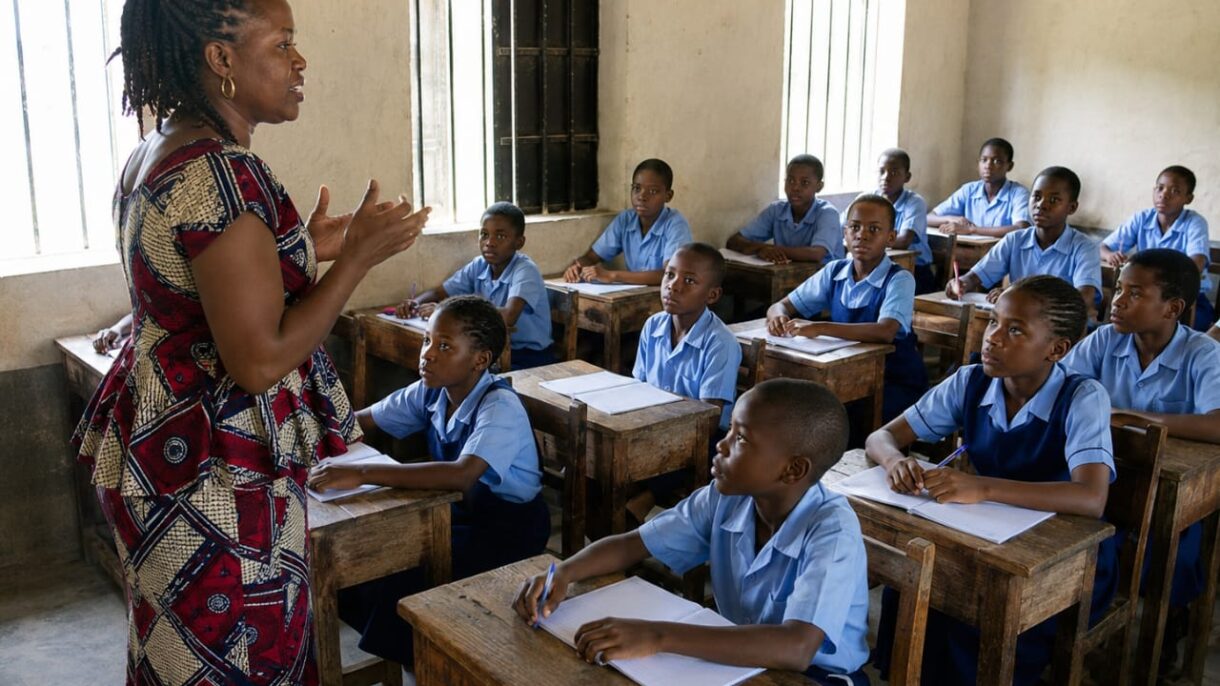

What if a child’s future no longer depended on whether there was a functioning school building within walking distance?
Nigeria’s education crisis demands more than concern; it demands a different way of thinking. UNICEF reported in 2024 that 10.2 million primary-school-age children and another 8.1 million junior-secondary-age children were out of school. The crisis extends beyond enrolment: 74% of children aged 7–14 lacked basic reading and mathematics skills. UNICEF also reports that girls represent about 60% of Nigeria’s out-of-school primary-age children.
Poverty, inadequate infrastructure, insecurity, displacement and mobility continue to keep children away from learning. In Borno, Adamawa and Yobe alone, insecurity led to the closure of 113 schools, while UNICEF estimates that about two million children remain out of school in northeast Nigeria, many of them displaced by conflict . For girls, these barriers intersect with additional pressures, including child marriage; UNICEF reports that four in ten Nigerian girls are married before age 18.
I am Nigerian, and I have lived in this reality. For me, these numbers represent children whose possibilities are being restricted by geography and circumstance.
As an educational leader and instructional designer with experience managing education and development projects involving refugees and disproportionately vulnerable communities through UN-partnered organisations, building an effective, low-maintenance, non-traditional schooling system has become a life ambition.
My ongoing PhD journey in digital education and leadership is transforming that ambition into an increasingly informed action plan grounded in research, implementation strategies and the realities of the Nigerian context. Along that journey, I have also met remarkable educators and computer-science specialists who share a vision of taking quality digital education beyond traditional borders.
Technology alone will not solve Nigeria’s education crisis. But thoughtfully designed digital education can remove barriers of distance, mobility, infrastructure and cost. We can begin with junior and senior secondary education. We can build accessible, affordable and transformative learning that reaches girls and boys wherever they are.
This cannot be built alone. I believe in bottom-up transformative leadership: sense the problem, seize the opportunity, mobilise people and build.
No limits. It can be done.
If you share this dream, share your thoughts, expertise, support or simply help carry the message forward.
References
UNICEF. (2024, February). Nigeria takes bold steps to end child marriage and protect the rights of children. https://www.unicef.org/nigeria/press-releases/nigeria-takes-bold-steps-end-child-marriage-and-protect-rights-children
UNICEF. (2024, September). Immediate action needed to protect Nigeria’s children and schools. https://www.unicef.org/nigeria/press-releases/immediate-action-needed-protect-nigerias-children-and-schools
UNICEF. (2025, February). Connecting every child to digital learning. https://www.unicef.org/nigeria/stories/connecting-every-child-digital-learning